Peter Joseph Savage
In the WoodsPeter Joseph Savage is one of three twelve-year-old friends whose disappearance in the woods at Knocknaree becomes an enduring absence in Rob Ryan’s life. Peter is last seen going into the wood with Rob and Germaine Elinor Rowan; fourteen months later, his torn watch is found there, but neither he nor Germaine is ever found. For Rob, Peter survives both as an unresolved missing child and as the companion preserved in a photograph that he later used to invent a twin brother.
Identity and Life at Knocknaree
On the afternoon of August 14, 1984, Peter was playing with Germaine Elinor Rowan and Adam Robert Ryan in the road where their houses stood in Knocknaree, a small town in County Dublin. The three were all twelve. On that clear, hot day, residents saw them at different points playing outdoors, including balancing on a wall, riding bicycles, and using a tire swing. Their ordinary neighborhood play forms the last known stretch of Peter’s life before he entered the wood.
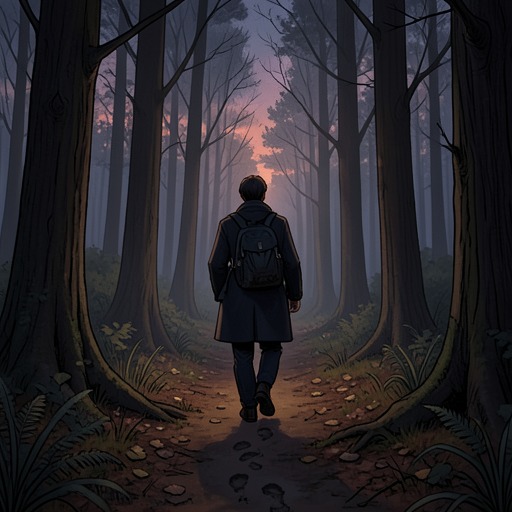
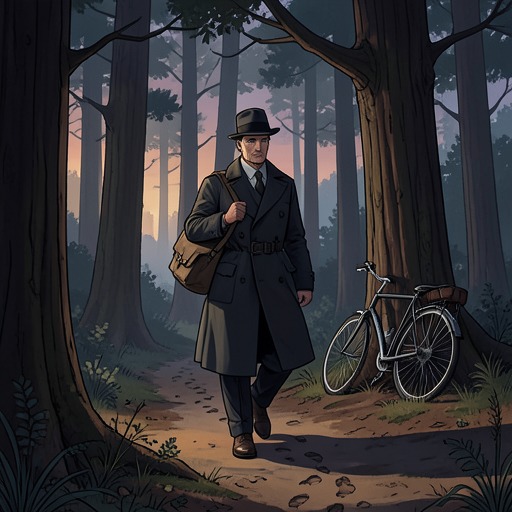
The children left their bicycles in the Savages’ front garden at about three o’clock and told Peter’s mother they were going to play in the wood. They went there often and knew that part of it well, so she had no reason to think they would get lost. She told Peter to be home by half past six for tea; his wristwatch made him the child explicitly entrusted with keeping track of the time. Several witnesses saw the three climb over the wall at the end of the road and go into the wood.
Disappearance and Search
When Peter had not returned by a quarter to seven, his mother checked with the other children’s mothers, assuming he might have gone to one of their houses. None of the three had come home. Peter was normally reliable, but at first the parents thought the children had lost track of time while absorbed in a game. His mother then went into the wood from the road and called for them. She heard no answer and encountered no sign that anyone was there.
The search continued through the night and for weeks. Volunteers combed nearby fields and hills, searched known bog holes and drains, and divers examined the river running through the wood. These efforts yielded no trace of Peter or Germaine. Police appeals and a high-profile media campaign also failed to establish what had happened to them. Peter’s disappearance therefore remains unresolved: the record establishes when and where he was last seen, but not what followed.
The Watch and the Unresolved Evidence
Fourteen months after the children vanished, a local resident walking his dog found a wristwatch in undergrowth about two hundred feet from the tree where Adam Robert Ryan had been found. Its face showed a cartoon footballer in action, and a football tipped the second hand. Peter’s parents identified it as his, and his mother confirmed that he had worn it on the afternoon he disappeared. The watch is the last concrete object linking Peter to the wood after the children entered it.
The plastic strap appeared to have been torn forcefully away from the metal face, perhaps after catching on a low branch while Peter was running. Partial fingerprints on both strap and face were consistent with prints from Peter’s belongings. The watch thus supplies a physical detail where the search produced no body or further trace, but it does not explain how or why he disappeared. The contrast between the recognizable, identifiable object and the absence of Peter himself gives the discovery its bleak force.
Peter in Rob Ryan’s Memory
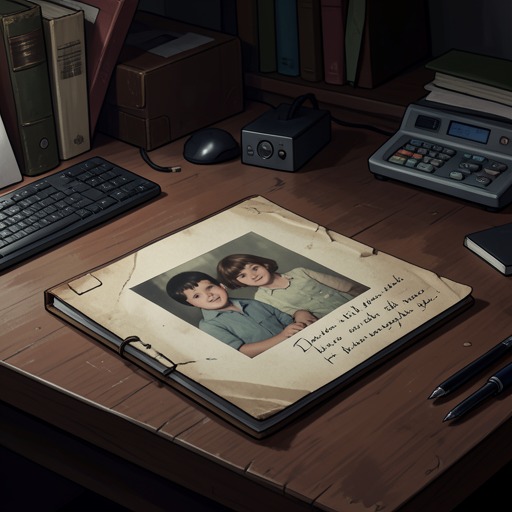
A photograph taken during the same childhood friendship gives Peter a second, intimate presence in the story. Rob’s father made the boys repeat a stunt on Peter’s bicycle, with Rob riding and Peter perched on the handlebars, arms spread. The photograph caught them airborne against the sky, their eyes shut and mouths open in a yell. Its apparent flight is a frozen image of their shared play, but also an image whose lightness is shadowed by the later disappearance.
When Rob went to boarding school, he glued the photograph to cardboard and set it beside his bed, where only two family pictures were allowed. He told his dormmates that he had a twin brother at another school in Ireland, and spun stories about their holiday adventures using the image of Peter on the handlebars. The stories were partly true and partly invented; Peter’s likeness became the material for a false account of a brother who was elsewhere. In this way, Rob’s invention does not resolve Peter’s absence but gives it a private, repeatable form: the missing friend remains beside him in the photograph, suspended in a moment before the boys’ lives divided into the found and the never found.